Jeju Haenyeo Hijiki
Highlights
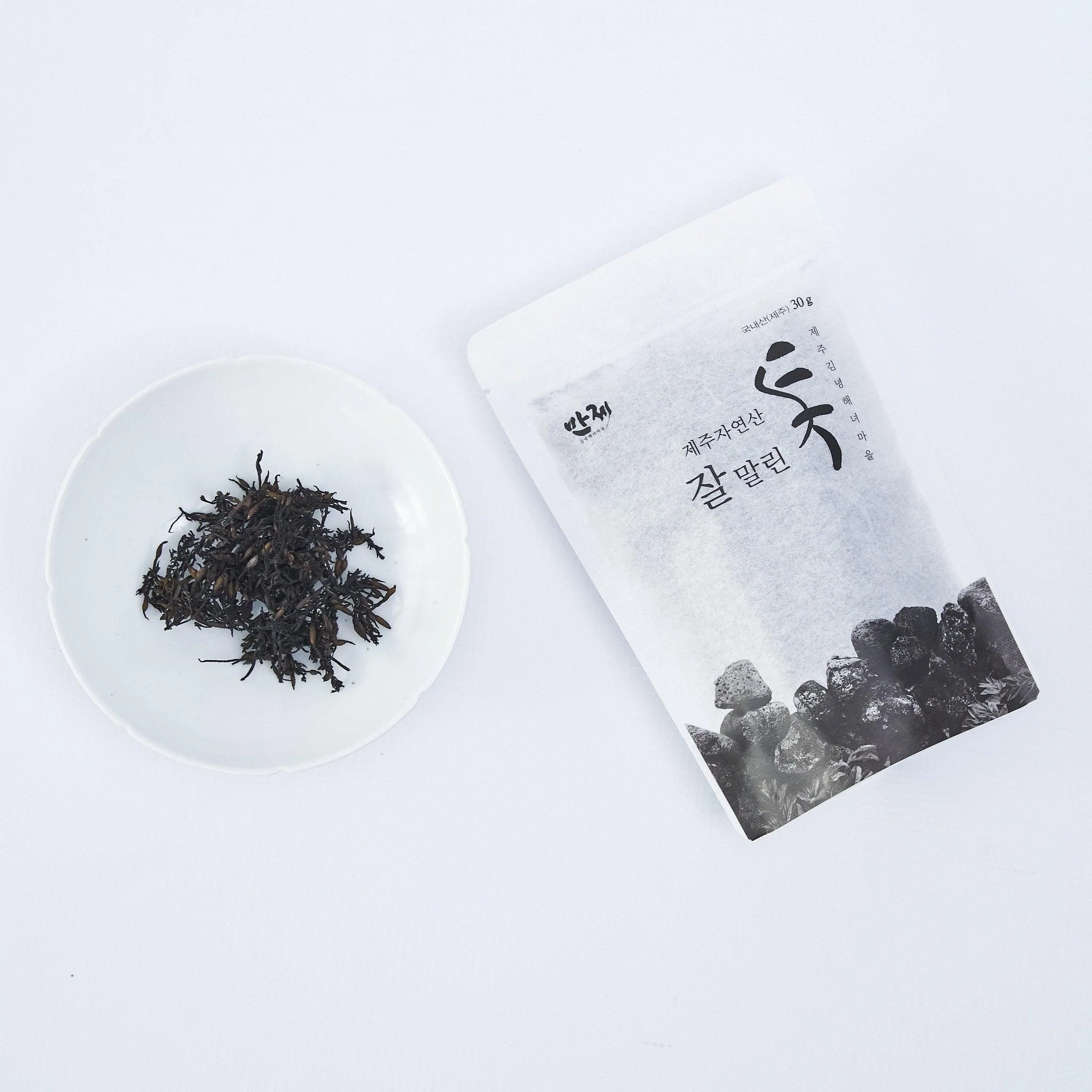
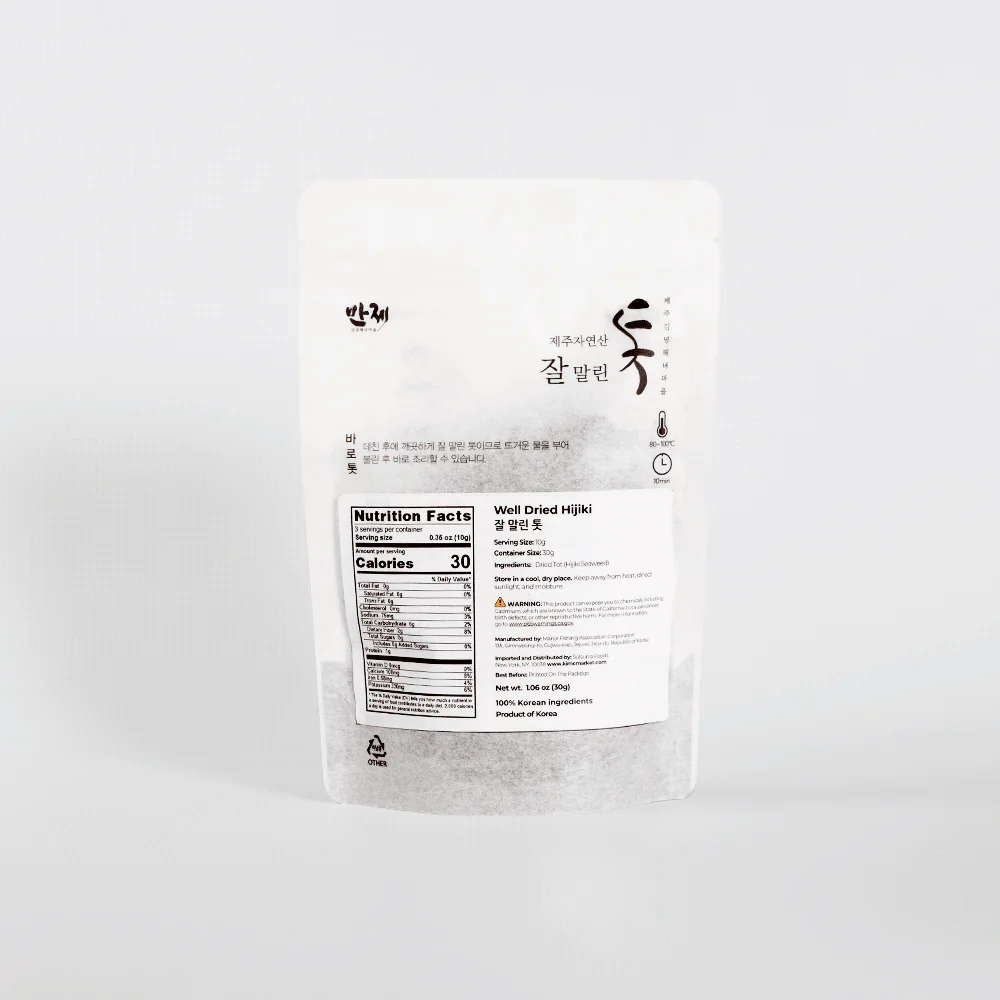
- Producer: Haenyeo in Jeju Island
- Ingredients: 100% natural, wild harvested Jeju hijiki
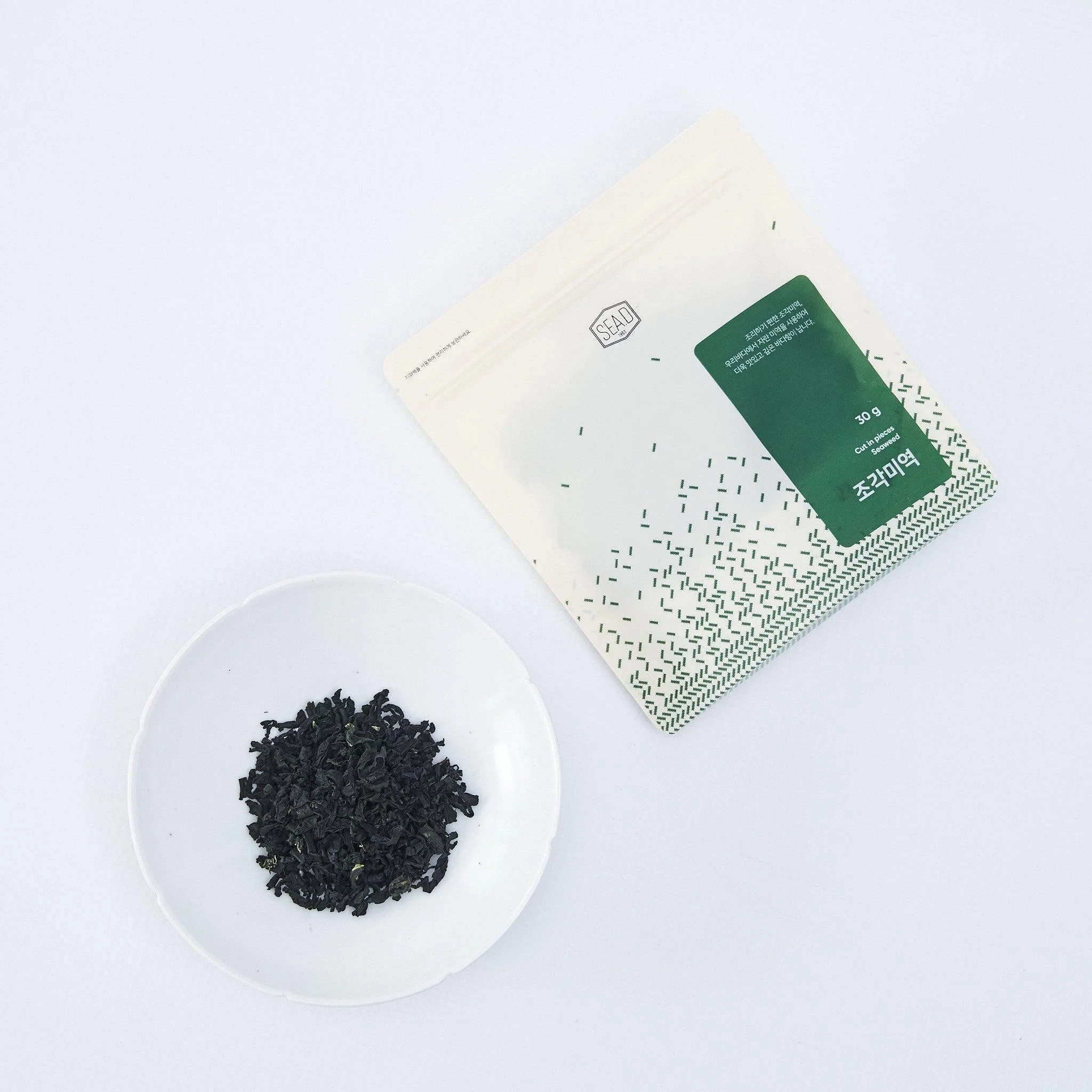
- Use: This hijiki has been washed clean and dry. Soak this hijiki in warm water before you use it.
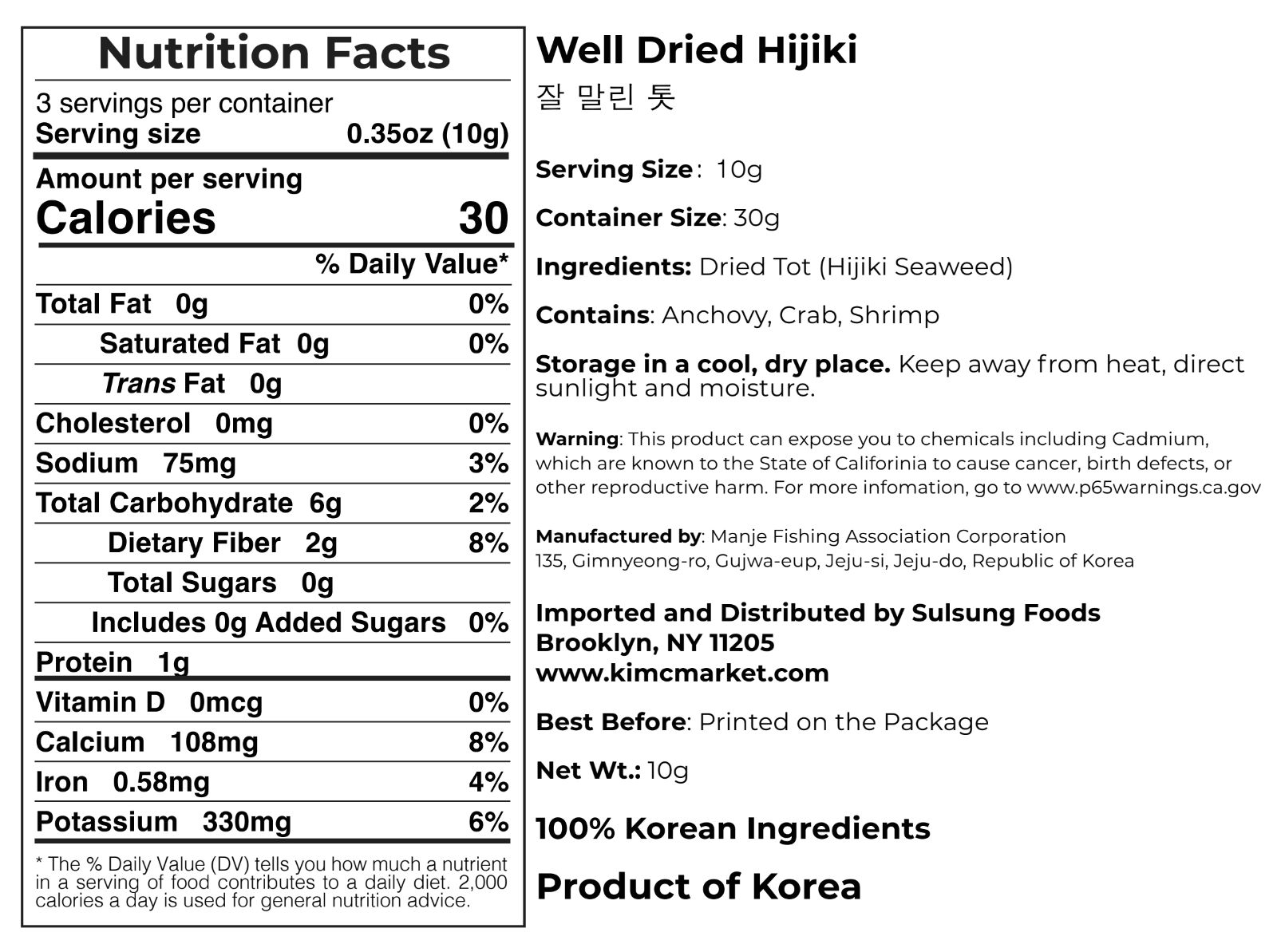
Net Weight: 30g (= 1.1 oz)
Storage Method: Store in a cool and dry place, avoid direct sunlight.
About
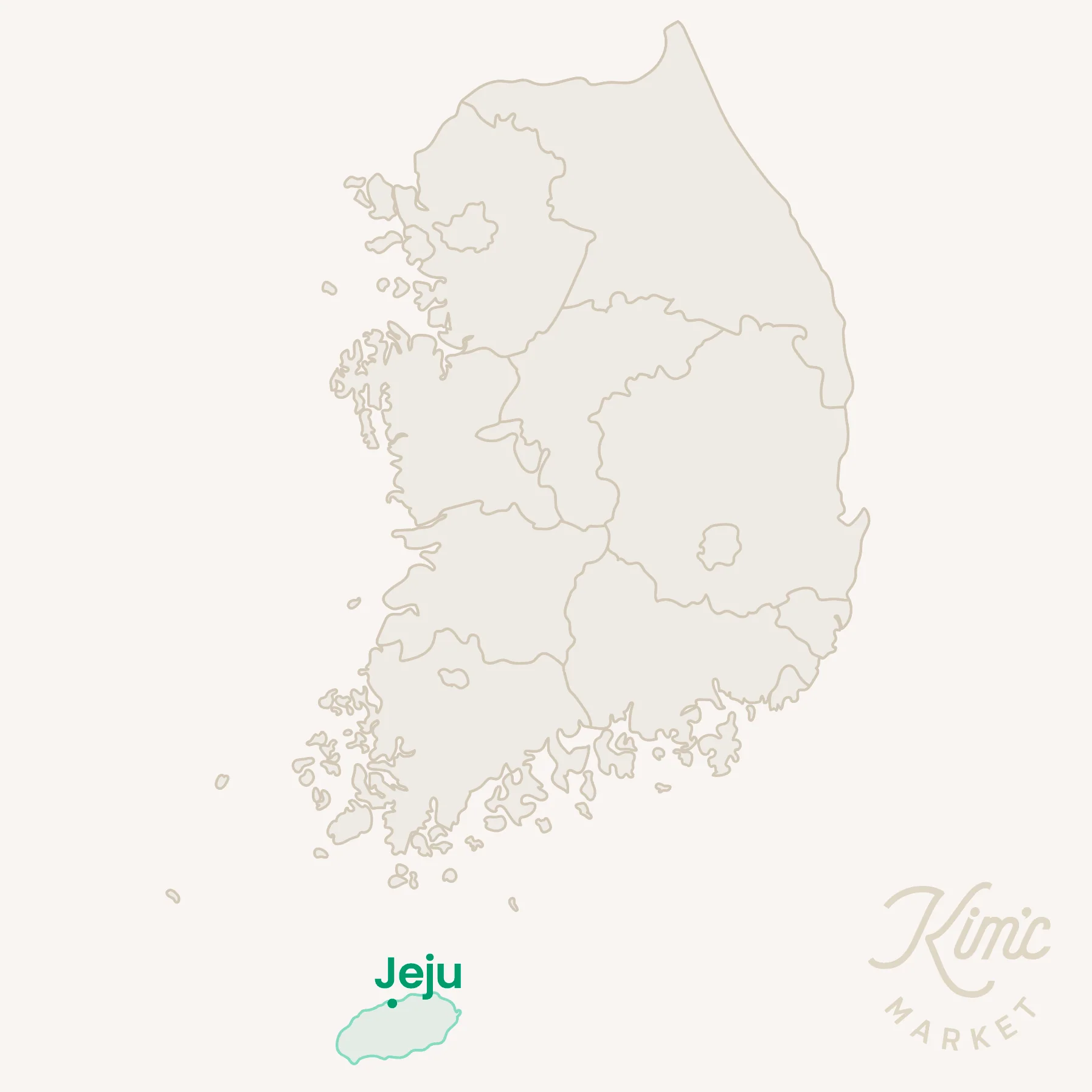
Haenyeo (해녀, sea women) are female free divers in Jeju Island. They make a living by collecting seaweed and other sea life from the ocean.
Born and raised in Jeju, Kim Soo Jung, a haenyeo, was always proud of the seafood from her beloved island. In her younger days, she started selling fresh seafood she harvested from the ocean. Roughly two decades passed, and her small venture grew to be Gimnyeong Haenyeo Village in Manje. Her commitment is to provide fresh, cleanly prepared seafood to customers. Everyday Gimnyeong Haenyeo Village is full of energy and laughter of life long haenyeo.
김녕해녀마을 김수정님은 제주도에서 나고 자란 제주 토박이에요. 그래서 제주 수산물에 대한 자부심이 남다른 분이죠. 제주 바다에서도 물 맑기로 유명한 만제에서 20여 년 전부터 신선한 수산물을 직접 손질해서 판매하기 시작했는데, 이것이 만제김녕해녀마을이 되었습니다. 제주를 닮은 깨끗하고 싱싱한 수산물만을 정성스럽고, 깔끔하게 손질해 고객에게 먹는 즐거움과 건강에 보탬이 되는 식품을 드리겠다는 신념을 가지고 있답니다. 평생을 제주 바다와 함께한 해녀가 갓 잡아올린 제주 해산물을 정성스러운 손길로 먹기 좋게 장만하여 전해드리는 만제김녕해녀마을에는 싱싱함이 가득합니다.
Description
Hijiki (톳 in Korean) is a brown sea vegetable growing wild on rocky coastlines around Korea and Japan. An important part of the Japanese diet for centuries, hijiki is rich in dietary fiber, and essential minerals. Low in calories, hijiki is also good for people on a diet.
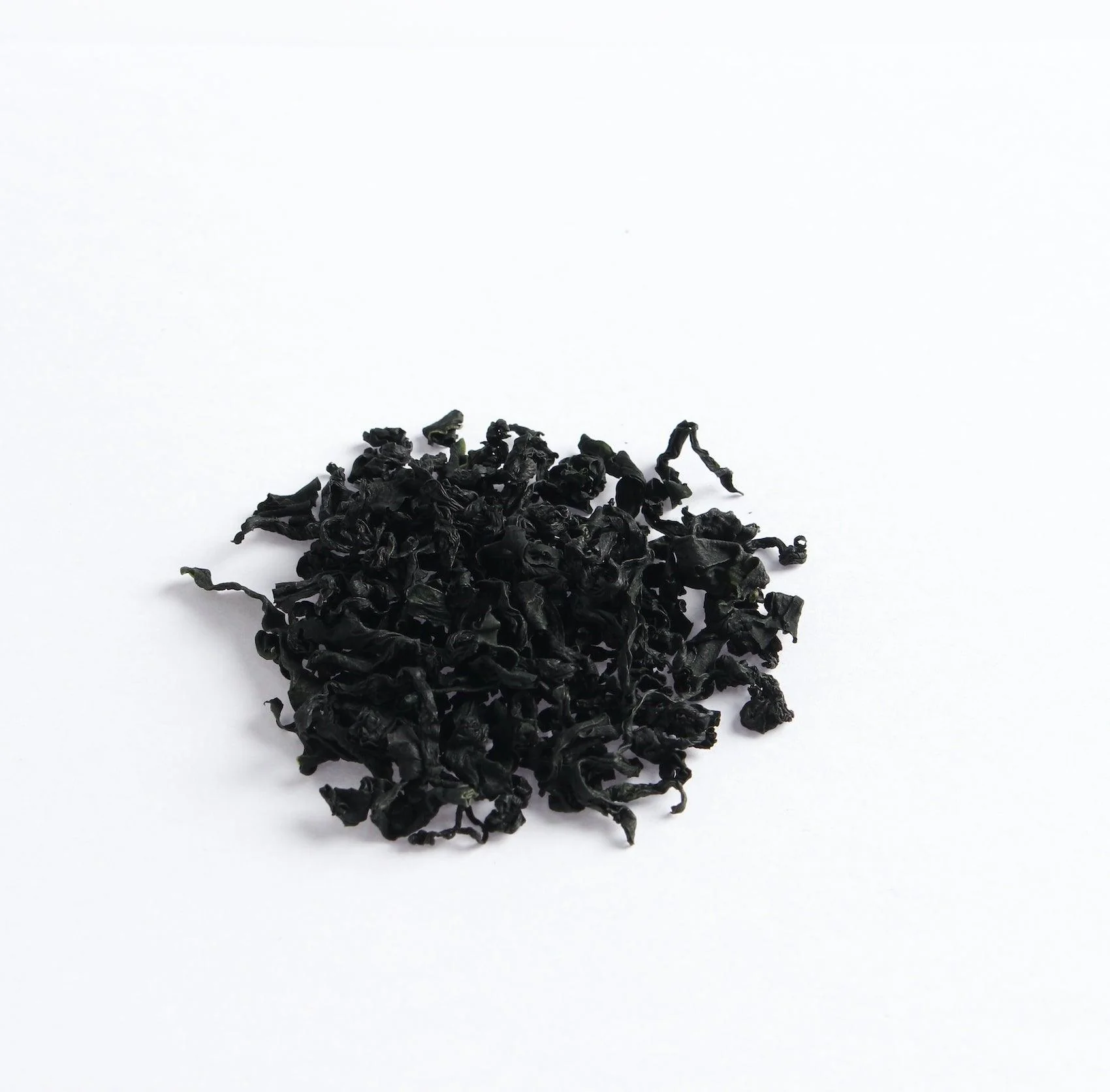
There are multiple ways to consume hijiki depending on its size or age. Fresh hijiki usually mixed with vinegar can serve as a hijiki vegetable side dish. Grown hijiki is often dried, blanched and cut into small pieces.
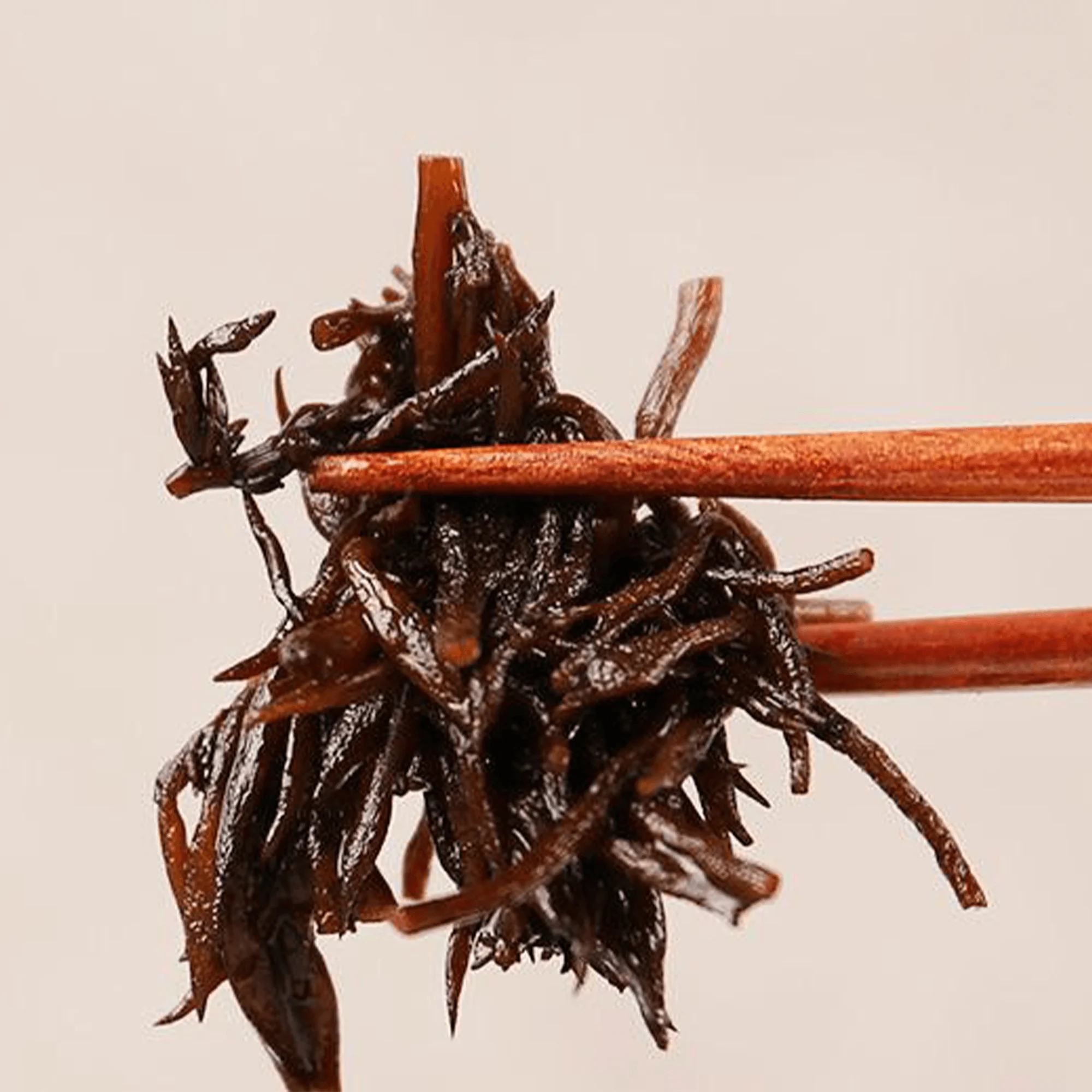
Gimnyeong Haenyeo Village is a cooperative of haenyeo, female fishing divers in the Korean province of Jeju. They hand harvest wild hijiki from the ocean. This hijiki has a long shelf life as it is dry. Putting this on your rice, soup or baby food will upgrade it to a nutritious, healthy, flavorful meal.
“히지키 (Hijiki)”란 이름으로 널리 알려진 톳은 식이섬유가 풍부하고 칼슘, 철분, 마그네슘 함유량도 높은 건강식품이지요. 특히 제주도 바다에서 자라는 톳은 바다의 불로초라고 불릴 정도로 영양분이 뛰어나요. 칼로리가 낮아 체중 조절식단에도 자주 쓰입니다.
톳은 크기나 자란 기간에 따라서 섭취방법도 조금씩 달라요. 생톳은 부드러워서 식초를 이용한 톳나물이나 톳무침으로 드실 수 있고요. 완전히 자란 톳은 주로 말린 후 삶아 드시거나 밥 지을 때 넣는 톳밥으로 드실 수 있어요.
제주 김녕해녀마을은 완전히 자란톳을 선별해서 데치고 건조한 뒤 밥알처럼 생긴 톳을 만들어요. 건조했기 때문에 보관이 편하고 사용기간도 길지요. 국에 넣거나 밥 또는 이유식에 조금 얹어 드실 수도 있고 일식집에 나오듯 반찬으로도 유용합니다.

Description
Highlights
- Producer: Haenyeo in Jeju Island
- Ingredients: 100% natural, wild harvested Jeju hijiki
- Use: This hijiki has been washed clean and dry. Soak this hijiki in warm water before you use it.
Net Weight: 30g (= 1.1 oz)
Storage Method: Store in a cool and dry place, avoid direct sunlight.
About
Haenyeo (해녀, sea women) are female free divers in Jeju Island. They make a living by collecting seaweed and other sea life from the ocean.
Born and raised in Jeju, Kim Soo Jung, a haenyeo, was always proud of the seafood from her beloved island. In her younger days, she started selling fresh seafood she harvested from the ocean. Roughly two decades passed, and her small venture grew to be Gimnyeong Haenyeo Village in Manje. Her commitment is to provide fresh, cleanly prepared seafood to customers. Everyday Gimnyeong Haenyeo Village is full of energy and laughter of life long haenyeo.
김녕해녀마을 김수정님은 제주도에서 나고 자란 제주 토박이에요. 그래서 제주 수산물에 대한 자부심이 남다른 분이죠. 제주 바다에서도 물 맑기로 유명한 만제에서 20여 년 전부터 신선한 수산물을 직접 손질해서 판매하기 시작했는데, 이것이 만제김녕해녀마을이 되었습니다. 제주를 닮은 깨끗하고 싱싱한 수산물만을 정성스럽고, 깔끔하게 손질해 고객에게 먹는 즐거움과 건강에 보탬이 되는 식품을 드리겠다는 신념을 가지고 있답니다. 평생을 제주 바다와 함께한 해녀가 갓 잡아올린 제주 해산물을 정성스러운 손길로 먹기 좋게 장만하여 전해드리는 만제김녕해녀마을에는 싱싱함이 가득합니다.
Description
Hijiki (톳 in Korean) is a brown sea vegetable growing wild on rocky coastlines around Korea and Japan. An important part of the Japanese diet for centuries, hijiki is rich in dietary fiber, and essential minerals. Low in calories, hijiki is also good for people on a diet.
There are multiple ways to consume hijiki depending on its size or age. Fresh hijiki usually mixed with vinegar can serve as a hijiki vegetable side dish. Grown hijiki is often dried, blanched and cut into small pieces.
Gimnyeong Haenyeo Village is a cooperative of haenyeo, female fishing divers in the Korean province of Jeju. They hand harvest wild hijiki from the ocean. This hijiki has a long shelf life as it is dry. Putting this on your rice, soup or baby food will upgrade it to a nutritious, healthy, flavorful meal.
“히지키 (Hijiki)”란 이름으로 널리 알려진 톳은 식이섬유가 풍부하고 칼슘, 철분, 마그네슘 함유량도 높은 건강식품이지요. 특히 제주도 바다에서 자라는 톳은 바다의 불로초라고 불릴 정도로 영양분이 뛰어나요. 칼로리가 낮아 체중 조절식단에도 자주 쓰입니다.
톳은 크기나 자란 기간에 따라서 섭취방법도 조금씩 달라요. 생톳은 부드러워서 식초를 이용한 톳나물이나 톳무침으로 드실 수 있고요. 완전히 자란 톳은 주로 말린 후 삶아 드시거나 밥 지을 때 넣는 톳밥으로 드실 수 있어요.
제주 김녕해녀마을은 완전히 자란톳을 선별해서 데치고 건조한 뒤 밥알처럼 생긴 톳을 만들어요. 건조했기 때문에 보관이 편하고 사용기간도 길지요. 국에 넣거나 밥 또는 이유식에 조금 얹어 드실 수도 있고 일식집에 나오듯 반찬으로도 유용합니다.